

Obtaining an Electrician Certificate at a Community College
You can follow your dream of becoming an electrician if have the appropriate education and training. electrical certificate uk of people enroll in a trade school, or an apprenticeship, but it's also possible to finish a certificate program at a community college.
The requirements for learning vary by state, but they typically involve classroom study and on-the-job training under an experienced master electrician. Once you've completed your apprenticeship, you'll need to pass an exam in order to obtain your electrical license.
Education Requirements
Traditional four-year college degrees take students on average 5.5 year to complete. More students are opting to attend apprenticeship programs or trade schools that permit them to be ready for work after completing their having completed their education. One option is to become an electrician, with a salary that is competitive and many job opportunities after you've been licensed.
For most electrician programs, a high school diploma or an equivalent (such as GED) is required. This educational background provides foundations in math and science that will help you pursue education as an electrician.
Apprenticeships are a method for aspiring electricians to begin their education. These programs combine classroom instruction with hands-on training under the supervision of a master electrician. An apprenticeship typically lasts about four years, or 6,000 to 10,000 hours, based on the state of the.
Once an apprentice has completed the minimum training hours necessary to be licensed, he/she can take the exam for electrician license. The test evaluates your understanding of electrical concepts, safety procedures and local laws. The test also tests your ability to use the knowledge you've acquired in a practical setting.
The majority of states require that apprentices who want to obtain a license must pass both a practical and a written test. The written exam is usually built on the National Electrical Code, while the practical exam tests your understanding of real-world electrical systems and techniques for construction.
These requirements aren't the only ones. The majority of states require that an electrician renews his or his license after completing a certain number of continuing education hours. These CE hours should be focused on safety and most recent technology, as well in the context of industry-related laws and regulations.
Although the exact number of CE hours required by each state is different electricians must complete at least 4-8 hours of continuing professional education every year. Failure to meet this requirement could lead to license suspension or cancellation.
While getting an electrician licensed isn't straightforward, it could be rewarding if you love working with electricity and solving problems in this field. This is a job that has plenty of opportunity for advancement because there are a lot of open positions in this field. The demand for electricians with the right skills is expected to grow nationally over the next few years.
Experience Requirements
Electricians utilize their understanding of electricity to set up and maintain electrical wiring and power distribution systems in homes, offices and other structures. In turn being an electrician requires a combination of classroom training and practical experience under the supervision of a skilled electrician.
Each state has specific requirements for electrician certifications. You must complete a mixture of classroom instruction and on the job training in an apprenticeship program. Some states also require that you pass an exam in order to obtain a certificate or license.
Many states offer apprenticeship programs at trade schools, Independent Electrical Contractors, Associated Builders and Contractors, or Joint Apprenticeship & Training Committees (JATC). Some electricians opt to pursue a degree in electrical or mechanical engineering. technology.
After you've completed your training, you'll be able to receive a certificate by taking an exam and proving your knowledge. Certain states allow hours of training at a trade school or community college to be counted towards your requirements. Others may not.
To earn a journeyman's certificate, you must have at least 8000 hours of work experience, and at least 6,000 of those hours working on industrial or commercial projects. You must pass a fitness assessment and trade test.
The New Mexico Regulation and Licensing Department regulates journeyman electricians in New Mexico. The department issues permits for journeyman electricians, which allow you to work on residential, industrial, and commercial projects.
There are three kinds of licenses for journeymen available that are Class A, B, and Master/Limited. A Class A license permits you to work on one single farmstead or residential circuit, whereas the Master/Limited license allows you to work on single-family and multi-family circuits.
You can work as a journeyman for up to two years prior attaining the required experience to pass the journeyman certification exam and obtain your certificate. Once you have gained the required experience, you can then apply for a master license.
If you are interested in becoming a master electrician, you must complete at least 12,000 hours of on-the-job training under the supervision of a master electrician licensed by the state. You must prove your experience by obtaining verification from every master electrician that supervised you.
Requirements for licensing
Based on your location and the type of work you're looking to do depending on your location and the type of work you want to do, you might need to obtain a license to be an electrician. The requirements vary from one state to the next . They can include education and experience. You'll usually need to complete a specific amount of hours in class, report on your work that is supervised and pass an exam.
Many apprenticeship and trade schools programs offer classroom instruction and hands-on training. An apprenticeship is a great method to acquire the knowledge needed to become an electrician. It typically lasts between five years, and after that you may apply for a certificate as an electrician.
There are a variety of online options available that let you study at your own pace, without limitations on time, if don't want or have enough time to attend an educational institution for trades. Penn Foster is one of the best. Penn Foster is one of the top. Their courses are NEC (National Electric Code compliant) and adapted to your state's requirements for licensing.
Mike Holt Enterprises is another option. This company offers a comprehensive set of study materials, including books and videos. They cover the major aspects of electrician certification in a clear format that you can follow at your pace.
They also provide a variety of study tools that can aid you in tracking your progress and establish goals. They have quizzes, exams and other learning tools that make it simple to keep up with your studies.
There are also a variety of state-specific online study guides that can be used to prepare for the electrical certification exam. These study guides were written by an instructor who is certified and provide clear explanations of the essential concepts. They also include practice questions that are excellent for getting prepared for the actual certification test.
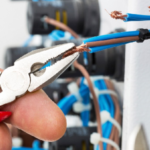
These resources aren't the only ones available. You could also benefit from reciprocal licensing agreements between states. This permits you to be licensed in one state and work as an electrician in a different state.
For example in New York you can get a master electrician or journeyman certification by having at least 8000 hours of work experience. 6,000 must be in industrial or commercial jobs. You must also pass an exam as well as pass a background check.
Career Opportunities
Electricians work in different settings to install maintenance, repair, and install electrical systems. Electricians use a variety of equipment and are often faced with challenging situations. They require an unwavering commitment to work.
The Bureau of Labor Statistics projects that jobs for electricians will grow 8% from 2019 to 2029. This is above the average for all occupations. This is partly due to the rising demand for electrical system upgrades and the need to replace employees who have switched to other areas.
You can be an electrician in many situations, such as installing cables through buildings and working with security and fire alarm systems. These positions can be very rewarding and allow you to make a difference in people's lives.
Many electricians start their careers as helpers or apprentices getting valuable work experience before they begin their formal education at a trade school or community college. These programs offer classroom instruction and on-the-job training to help you acquire the necessary skills to become an electrician.
An apprenticeship program typically lasts between five to six years. It involves working as an electrical contractor under the supervision of master electricians or a licensed journeyman. You can then become a fully accredited electrician in the field you want to specialize in.
It is essential to learn about the National Electrical Code and other technical standards that regulate electrical work. You can be secure and efficient by being aware of the most recent updates to the code.
Additionally, you will need to improve your customer service skills and business understanding. These skills will allow you to effectively communicate with customers and work in teams.
The abilities you require to be an electrician include a strong work ethic, patience, and logical methods for solving problems. You'll also have to be able to use your hands effectively, physical endurance, as well as the ability to work in a team.
There are a myriad of accredited community colleges and trade schools that offer electrical training. Some offer online classes that can be accessed anytime, anywhere. No matter what your preferred learning method, you'll need to complete your studies by passing the state test for licensure.